
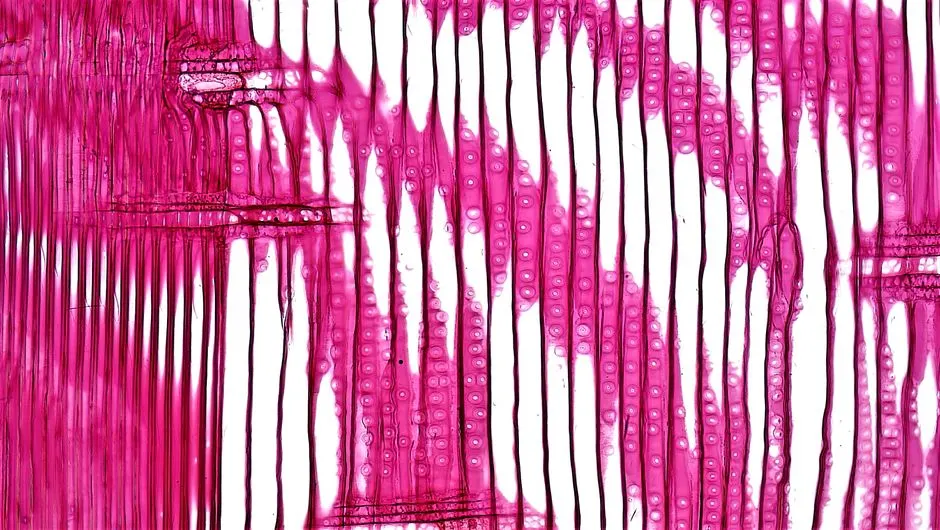
Chlorella has a rigid, multi-layered cell wall that is difficult to break mechanically and that many animals cannot digest. The wall is made of tough polysaccharides, including cellulose-like fibres and, in many strains, a sugar-based polymer related to chitin, and it can be 100 nanometres or more thick. Its strength protects the cell, but it also means that unbroken Chlorella passes through some digestive systems largely intact.
What the wall is made of
Chlorella’s wall is built of several layers. The inner layer is a rigid polysaccharide skeleton, with cellulose-like microfibrils and glucosamine-containing sugars. Outside this, some strains have a thin, very resistant layer called sporopollenin-like material, similar to the substance that protects pollen. The exact composition differs among strains and with the age and conditions of the culture, and older cells have thicker walls.
Why it is a barrier
The wall protects the cell from drying, from grazing and from chemical attack. For anything that eats Chlorella, it also stands between the animal and the nutrients inside. Animals differ widely in how well they cope:
| Eater | Digestion of whole Chlorella |
|---|---|
| Rotifers, Daphnia, many zooplankton | Reasonably good; they have strong gut processes and grind or digest cells |
| Fish larvae, young fry | Limited if eaten directly; nutrition arrives mainly via zooplankton |
| Many fish and shrimp | Variable; some pass whole cells |
| Humans and most mammals | Poor, unless the wall has been broken |
This is why Chlorella products intended for food are sold “cell-wall broken”. Spirulina, in contrast, has a soft wall; see cyanobacteria vs algae.
How the wall can be broken
- Bead milling: the culture is shaken with tiny beads that crack cells open. Common in industrial processing.
- High-pressure homogenisation: the culture is forced through a narrow gap.
- Ultrasound: sound waves burst cells.
- Enzymes: cellulase and similar enzymes soften the wall.
- Freeze and thaw, or drying: weaker, partial disruption.
These are industrial or laboratory steps. They are not needed for feeding live cultures to filter feeders, which handle whole cells well.
What this means for hobbyists
- For rotifers, Daphnia and filter feeders, feed live Chlorella as it is. See feeding rotifers with Chlorella.
- For animals that eat directly and have weak digestion, Spirulina or a broken-cell product may be more useful.
- A thick wall also helps Chlorella survive harvesting, drying and storage, which is why it is a robust culture; see choosing microalgae for live feed.
Seeing the wall
You cannot see the wall layers with a school microscope, but you can see empty, pale shells after cells divide. See how Chlorella reproduces and seeing microalgae under a microscope.
Chlorella across strains and conditions
Not every Chlorella wall is equally tough. Strains differ in wall thickness and chemistry, and a given strain changes its wall with conditions. Rapidly dividing cells in nutrient-rich medium have thinner, more flexible walls than cells in an old, nutrient-starved culture, which thicken and harden. Some strains also produce a very resistant outer layer when stressed. In practical terms, young cultures are somewhat easier for animals to digest than old ones, which is a strong argument for feeding from a culture that is in active growth and not one that has been standing for weeks. The phases are described in the growth phases of an algae culture.
Evidence from feeding trials
Studies of whole and disrupted algal cells in animal feeds generally find that breaking the cell wall increases the digestibility of algal protein and lipid. In fish and shrimp diets, whole Chlorella often shows low digestibility unless the cells are processed. In filter-feeding zooplankton, which grind or digest cells in a specialised gut, whole cells are used effectively. The upshot is that the right form depends on the animal, which is why aquaculture feed makers treat algae with milling or enzymes while hatcheries feed whole live cells to rotifers.
| Feed form | Typical use | Pros | Cons |
|---|---|---|---|
| Live whole cells | Rotifers, Daphnia, larval tanks | Fresh, alive, easy | Wall limits direct use by others |
| Dried whole cells | Backup feeds | Stable and convenient | Wall intact; modest digestibility |
| Broken-cell powder | Feed additives and supplements | Nutrients accessible | More processing, higher cost |
| Extracts | Pigments, oils | Concentrated | Not whole food |
What to do at home with this knowledge
- Feed from young, green cultures rather than old, pale ones.
- Use Chlorella mainly through the food chain by feeding rotifers and Daphnia, which break the cells efficiently.
- Combine with Spirulina for animals that eat algae directly and lack strong digestion; see choosing microalgae for live feed.
- Do not expect miracles from blending. A kitchen blender does not break Chlorella cells in any useful way; industrial bead mills and high-pressure systems are needed.
The wall as a feature
The same wall that frustrates feeding is why Chlorella is hardy. It survives freezing, drying, moderate osmotic shocks and the passage through weak guts, which helps it persist in the wild and makes starter cultures robust during shipping. It is one of the reasons a live Chlorella culture arrives in good condition after a few days in a parcel, as with our Chlorella vulgaris starters.
Common questions
Is whole Chlorella useless as feed?
No. Many aquatic animals, especially zooplankton, digest it well. It is a key link in the larval food chain.
Does the wall weaken with age?
The opposite: older cells tend to have thicker walls.
Is Spirulina easier to digest?
Yes, because it lacks a rigid cellulose-like wall.
Can I break the walls with a freezer?
Freezing and thawing cracks some cells but not most. It is not a reliable way to make Chlorella digestible.
Why do some products say “cracked cell wall”?
Because the manufacturer has used mechanical or enzymatic treatment to improve digestibility for human or animal use.
Ready to grow your own?
Live starter cultures, grown with care and shipped ready to thrive.
Spirulina PlatensisChlorella VulgarisVisit the shopGet new guides by email, and 10% off
Subscribe for 10% off your first order, plus our latest articles by email. No spam, unsubscribe any time.
Keep reading
What Is Phycocyanin? The Blue Pigment in Spirulina
Chlorophyll in Algae: How Microalgae Capture Light

Leave a Reply