
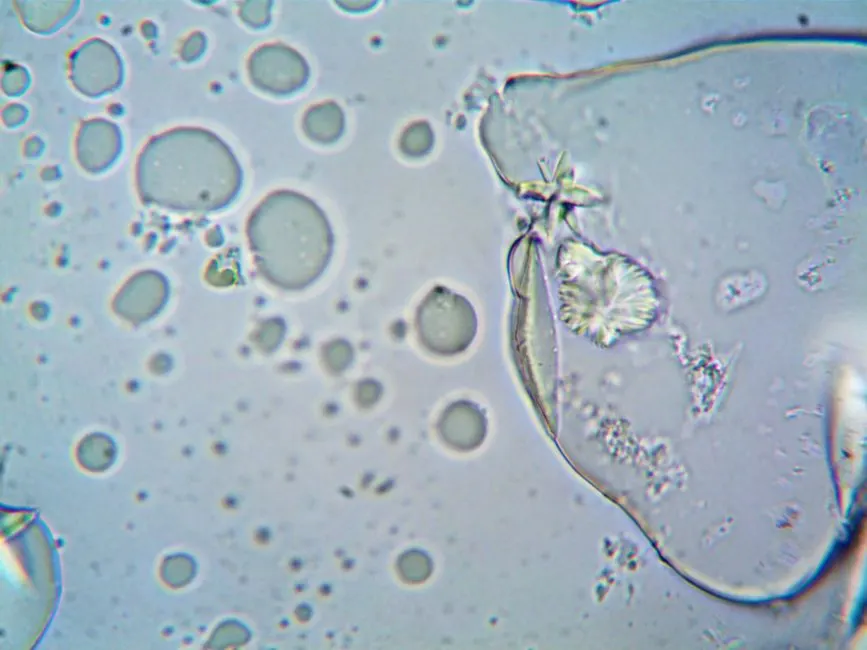
Chlorella is one of the best foods for freshwater rotifers. Its cells are small (2 to 10 micrometres), round and easy to ingest, and a rotifer population fed a steady supply of live Chlorella will multiply quickly. The trick is not in the algae but in the routine: feed small amounts often, keep the water clean and avoid letting the culture run out.
What rotifers are and why they matter
Rotifers are microscopic animals, usually 100 to 400 micrometres long, that move with rings of tiny hairs. They are the standard first food for many fish larvae because they are small enough for tiny mouths and they swim in a way that triggers feeding. Hatcheries feed marine species such as Brachionus plicatilis and freshwater species such as Brachionus calyciflorus or B. rubens.
Rotifers do not make their own nutrition. What they eat decides what the fish larvae receive, which is why quality algae matter. A rotifer culture with poor feed is like a delivery truck with empty boxes.
Setting up the rotifer culture
- Container. A 2 to 5 litre clear container works well to start. Wide shapes give more surface for gas exchange.
- Water. Use dechlorinated freshwater at 22 to 28 °C. For marine species, use diluted seawater at around 15 to 25 parts per thousand salinity.
- Aeration. Provide very gentle bubbling. Rotifers do not tolerate strong turbulence.
- Inoculum. Start with a visible handful of rotifers rather than a few. A thin start grows slowly and is easy to lose.
How to feed Chlorella
Feed a green, healthy Chlorella culture in small, regular doses. A good guide is to add enough that the water holds a pale green tint but you can still see to the bottom. If the water is dense and dark, you have added too much, and the surplus will rot.
- Frequency. Once or twice a day is better than one large dose.
- Quantity. Aim for a faint green tint. When the green clears in a few hours, the rotifers are keeping up.
- Quality. Use algae that are bright green and smell fresh. Brown or sour algae will harm the rotifers and the larvae they feed.
If you grow your own Chlorella alongside, harvest part of it every day or two so the rotifer feed is always young and active. How to judge that is covered in how to tell if your algae culture is healthy.
Keeping the rotifer culture stable
| Task | How often | Why |
|---|---|---|
| Siphon debris from the bottom | Every day or two | Removes dead rotifers and waste that foul the water |
| Replace part of the water (10 to 30%) | Every few days | Keeps ammonia and waste low |
| Harvest part of the culture | As needed | Prevents overcrowding, which causes sudden crashes |
| Check under a lens or microscope | Weekly | Confirms rotifers are active and carrying eggs |
The warning signs of a failing rotifer culture are sluggish animals, few eggs, and cloudy water. The most common cause is overfeeding or too much waste. If things go wrong, start a new container from the healthiest portion.
From rotifers to fish
Once your rotifers are established, harvest by pouring through a fine mesh (about 50 micrometres) and rinsing in clean water before adding to the fish tank. This avoids moving old water and waste. For the wider picture, see live feed vs dry feed for fish larvae, and for the algae side, green water in larval rearing.
Estimating how much to feed
Feeding by eye works, but a little arithmetic makes it repeatable. A rotifer can eat very roughly 10,000 to 50,000 algal cells per hour at the right density, and a healthy rotifer culture doubles every one to two days. If your culture holds, say, 100 rotifers per millilitre in 3 litres, that is about 300,000 animals, and a demand in the order of billions of algal cells per day.
A dense Chlorella culture holds tens of millions of cells per millilitre, so a modest volume covers it. In practice this works out to a few tens of millilitres of dense Chlorella per day for a 3 litre rotifer jar. Start with less, watch the water clear, and add more only when it clears within a few hours. Cell counts under a microscope, described in seeing microalgae under a microscope, make this exact if you want precision.
Boosting the nutritional value
Rotifers are what they eat, so the diet decides the quality of your live food:
- Use fresh, actively growing algae. Cells from a culture in late exponential growth have more protein and fewer storage products than old ones.
- Vary the diet. A mix of Chlorella and a small amount of Spirulina gives a broader range of nutrients than either alone.
- Enrich before feeding. Hatcheries add enrichment products rich in fatty acids to rotifers for a few hours before feeding to larvae. Marine larvae need long-chain fatty acids that Chlorella lacks; freshwater species are more forgiving.
- Do not starve before use. Keep rotifers fed until harvest so their guts are full.
Common rotifer culture problems
| Problem | Likely cause | What to do |
|---|---|---|
| Rotifers swim sluggishly and few carry eggs | Poor feed or old water | Change a third of the water; use fresh algae |
| Culture crashes after a few weeks | Waste and ciliates build up | Restart from a clean subsample; keep two jars |
| Foam on the surface | Dead cells and proteins | Siphon off; reduce feeding |
| Water is clear but rotifers few | Underfeeding | Add algae twice a day in small amounts |
| Many small round protozoa | Overfeeding with dense algae | Cut dose; restart if it persists |
Harvesting and moving rotifers
To harvest, pour part of the culture through a 50 micrometre mesh or plankton net, hold it under a gentle stream of clean water to rinse out the dirty culture water, then wash the net into a cup of fresh tank water. Do not leave rotifers out of water for long, and do not squeeze the mesh. Dose by the cup into the larval tank rather than by millilitres, and look for a faint pink or green gut in larvae as the sign they are feeding. Stage planning for this is in live feed vs dry feed for fish larvae.
Common questions
Can I feed rotifers dried Chlorella?
Yes, but live cultures give better results because they stay suspended and stay nutritious. Dried algae work as a backup.
How many rotifers do I need to start?
A visible cloud in the starter jar is enough. Even a small group multiplies within days if fed regularly.
Why did my rotifers disappear overnight?
Usually because of an oxygen drop from too much food, a sudden temperature change, or poor water quality. Keep feeding modest and the water clean.
Can I keep rotifers in the fridge?
For a few days, in a small volume, at around 10 °C, but they recover slowly and may lose condition. Fresh cultures work better.
Are rotifers the same as infusoria?
No. Infusoria is a loose term for tiny single-celled protozoa and bacteria. Rotifers are multicellular animals and are larger and more nutritious.
Ready to grow your own?
Live starter cultures, grown with care and shipped ready to thrive.
Spirulina PlatensisChlorella VulgarisVisit the shopGet new guides by email, and 10% off
Subscribe for 10% off your first order, plus our latest articles by email. No spam, unsubscribe any time.
Keep reading
Live Feed vs Dry Feed for Fish Larvae
Daphnia and Algae: Raising Live Food at Home
Leave a Reply