
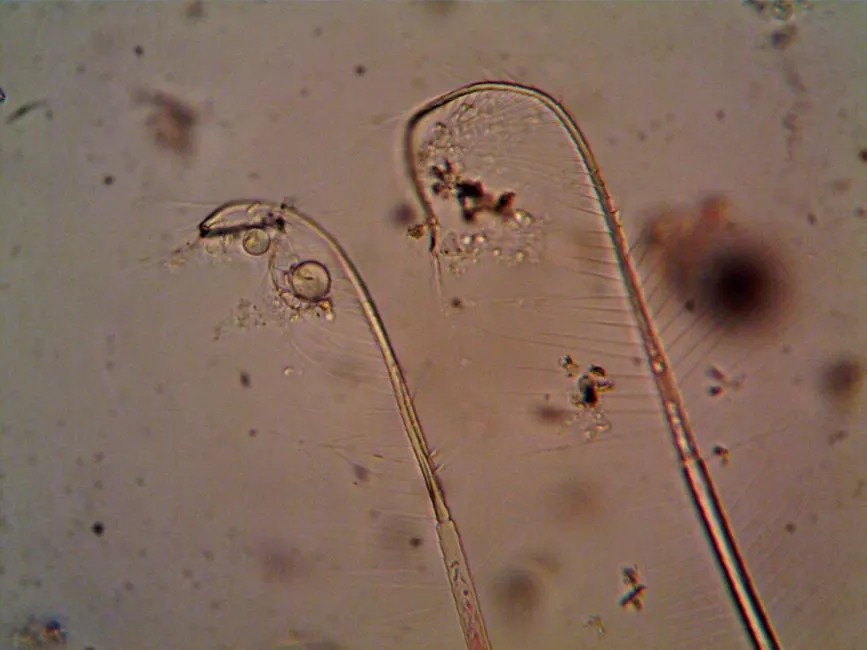
Daphnia are tiny freshwater crustaceans, 0.5 to 5 millimetres long, that feed by filtering algae out of the water. A small colony in a bucket of green water will multiply on its own and can supply a steady stream of live food for aquarium fish. The recipe is simple: cool, clean water, a gentle supply of green algae, and regular partial harvesting.
Why Daphnia are worth keeping
Daphnia are one of the best live foods for juvenile and adult fish. They move constantly, which triggers feeding, and their gut is full of algae that carry nutrition. They are also easy to produce: given the right conditions, females reproduce without males, so a colony can double in about a week.
Setting up
- Container. A wide bucket, tub or tank of 10 to 20 litres works well. Width matters more than depth.
- Water. Dechlorinated or aged tap water. Daphnia are sensitive to chlorine and to high ammonia.
- Temperature. 18 to 24 °C is ideal. They survive down to around 15 °C but struggle above 28 °C.
- Aeration. A very gentle bubble or none at all. Strong bubbling stresses them.
- Light. Moderate room light is enough; no direct sun.
- Starter. A cup of Daphnia from a reliable source, such as an aquarium shop or a clean pond.
Feeding with algae
Daphnia eat algae from the water, so the practical routine is to add green water every day or two. A few millilitres of live Chlorella per litre is a good start, enough to give a pale green tint. When the green clears in a day, the colony is ready for more. A little yeast or Spirulina can supplement the diet but easily fouls the water.
- Too little food and the colony stops breeding and shrinks.
- Too much food and the water turns cloudy and oxygen drops.
The balance is easy to see: the water should look light green or clear most of the day.
Harvesting
Scoop out Daphnia with a fine net every day or two, taking up to a quarter to a third of the population. Rinse briefly in clean water and feed to fish within minutes. Regular harvesting keeps density healthy; if you never harvest, the colony crowds and then crashes.
Signs and fixes
| Sign | Cause | Fix |
|---|---|---|
| Daphnia gather at the surface, gasping | Low oxygen, crowded or warm | Harvest, add gentle aeration, cool the container |
| Population drops suddenly | Overfeeding, ammonia, heat | Partial water change with aged water |
| Many dark eggs (ephippia) in the water | Stress from crowding or poor food | Harvest, feed, refresh water |
| Water goes cloudy white | Bacteria from overfeeding | Stop feeding; change a third of the water |
Keeping the algae supply going
Run a separate jar of green water to feed the colony; see how to split and scale up. Check the algae before you add it, using the five-point check. For the wider range of live foods, read culturing live food for your aquarium fish.
The Daphnia life cycle in practice
Understanding how Daphnia reproduce helps you read your colony. Under good conditions, females produce clutches of eggs, typically 5 to 30 or more, every two to four days. The eggs develop in a brood pouch under the carapace and hatch into miniature copies of the mother, which become mature in about one to two weeks depending on temperature. These offspring are all female and genetically identical to the mother, so a colony can grow very quickly.
When food is scarce, the water is crowded or the temperature drops, females produce a few males and then special thick-shelled resting eggs in a dark case called an ephippium. These survive drying and freezing, and they hatch when conditions improve. Seeing dark ephippia floating or on the walls is a signal of stress; fix the cause and the colony returns to asexual reproduction.
Setting up a two-bucket system
A reliable layout uses two containers so one always has the other as a backup:
| Container | Role | Management |
|---|---|---|
| Bucket A | Production, harvested every second day | Fed daily with green water; one third of the water renewed weekly |
| Bucket B | Reserve, left to build up | Fed lightly; harvest only when A fails |
| Algae jar | Supply of green water | Kept separate; see scaling up |
Swap roles every month or so, which also gives you a chance to clean one bucket thoroughly.
Protecting the colony
- Heat. Above about 28 °C, oxygen drops and Daphnia die quickly. Keep buckets cool and shaded.
- Chemicals. Avoid soap residue, air fresheners, aerosols and chlorinated water; Daphnia are very sensitive and are used as a test organism for water quality.
- Predators. Insect larvae from outdoor sources, such as dragonfly nymphs and water boatmen, eat Daphnia. Keep the bucket covered with a fine net outdoors.
- Overcrowding. A dense, brownish colony with poor water will crash. Harvest regularly.
From the bucket to the tank
Net the Daphnia, rinse them in a cup of clean, aged water, and tip them into the aquarium. Do not pour in the culture water. Fish should eat the lot within minutes; surplus Daphnia that live on in the tank will keep grazing algae. For small fry, sieve out the larger adults and feed the juveniles. For the full picture of the live food ladder, see culturing live food, and to judge the food supply, how to tell if your algae culture is healthy.
Common questions
Can I use pond water as a starter?
You can, but you may also bring in predators such as copepods and insect larvae. A purchased starter is cleaner.
Do I need to sort Daphnia by size?
Not usually. Fish eat different sizes as they grow. For tiny fry, filter out the smaller ones with a coarse mesh.
How long does a colony last?
Indefinitely, if you keep up the routine. Restart from a few animals if a colony ever looks tired.
Are Daphnia the same as brine shrimp?
No. Daphnia are freshwater crustaceans; brine shrimp live in salty water and are hatched from eggs.
Can I overwinter a colony?
Yes. Keep it indoors in a cool room at 15 to 18 °C with light feeding.
Ready to grow your own?
Live starter cultures, grown with care and shipped ready to thrive.
Spirulina PlatensisChlorella VulgarisVisit the shopGet new guides by email, and 10% off
Subscribe for 10% off your first order, plus our latest articles by email. No spam, unsubscribe any time.
Leave a Reply