
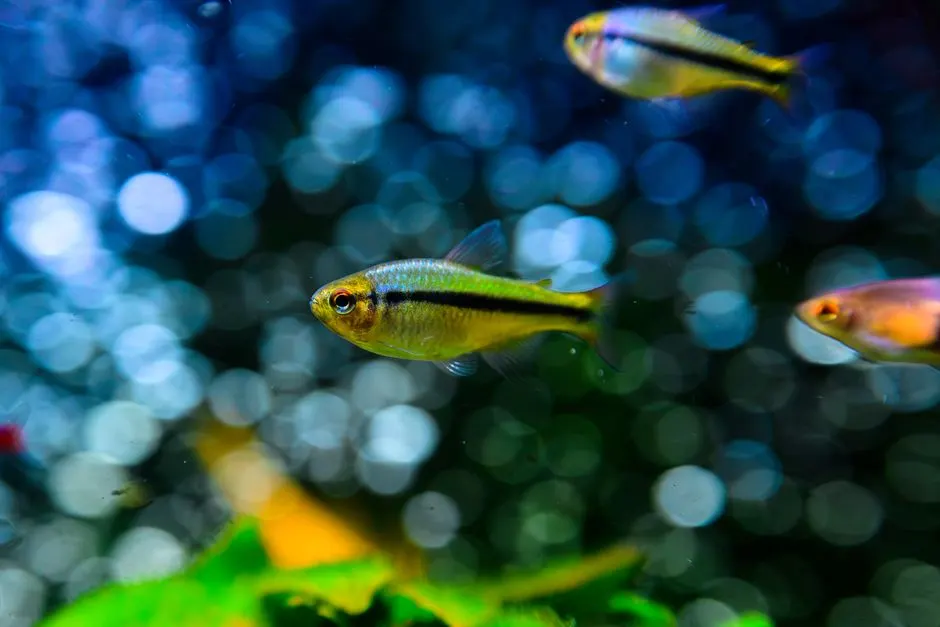
Live feed and dry feed do different jobs for fish larvae. Live feed, such as rotifers, copepods and Daphnia, is the right size, moves and triggers feeding. Dry feed is convenient, stores well and can be dosed precisely. Most breeders and hatcheries use both: live food to start larvae feeding, dry food to supplement and then replace it as the fish grow.
What live feed does well
- Triggers feeding. Many larvae are drawn to moving prey and ignore still particles.
- Fits tiny mouths. Rotifers of 100 to 300 micrometres fit the mouths of first-feeding larvae of many species.
- Stays in the water. Live food remains alive and suspended for hours, so it does not foul the tank as quickly as uneaten dry feed.
- Carries nutrients in. A rotifer fed on algae is a package of fats and proteins; see feeding rotifers with Chlorella.
What dry feed does well
- Convenience. No cultures to maintain, and available any time.
- Consistency. The nutrient content is known and fixed.
- Dose control. You can feed small precise amounts several times a day, or use an automatic feeder.
- Weaning. Eventually fish need to accept a prepared diet, especially if they will live in a normal tank.
Its drawbacks are that it sinks, it does not move, and it fouls the water quickly if overfed. Very small larvae often ignore it at first.
A staged plan
| Age of larvae | Main feed | Supporting |
|---|---|---|
| Days 0 to 3 (yolk sac) | None needed | Green water set up |
| Days 3 to 10 | Rotifers or infusoria | Green water; fine powder, a little |
| Days 10 to 21 | Baby brine shrimp or microworms | Fine dry feed introduced |
| Weeks 3 to 6 | Dry crumbles with live Daphnia | Reduce live food gradually |
| Beyond | Normal diet | Occasional live treats |
Timings differ by species, so use this as a guide, and check the requirements for the species you keep.
Where microalgae fit
Algae are not eaten much by larvae directly, but they matter in two ways: they feed the rotifers and Daphnia that larvae eat, and, as green water, they improve the tank environment. See green water in larval rearing and culturing live food. A live Chlorella starter supports both.
Feeding checklist
- Feed small amounts, several times a day.
- Remove uneaten dry food within an hour.
- Keep gentle aeration running.
- Do small daily water changes to remove waste.
- Observe full bellies: a visible food-filled gut shows larvae are feeding.
Matching food size to larval mouth size
The single most useful number in larval feeding is the width of the mouth, called the gape. Larvae can only take prey up to roughly 25 to 50% of their gape width, depending on species. Fish with tiny gapes, such as many small tetras and labyrinth fish, can only take prey below about 100 micrometres at first. Others, such as many cichlids, can eat baby brine shrimp from day one.
| Food | Approximate size | Typical first-feeding species |
|---|---|---|
| Green water (Chlorella) | 2 to 10 µm | Not eaten directly; feeds the prey |
| Infusoria | 30 to 100 µm | Very small fry such as some gouramis and killifish |
| Small rotifers | 100 to 200 µm | Many small egg-layers |
| Baby brine shrimp (Artemia nauplii) | 400 to 500 µm | Many fry from day 3 to 5 |
| Microworms | 2 to 3 mm | Fry from about a week old |
| Fine dry powder | 50 to 300 µm | Weaning stage |
If fry are not growing, a step down in size is the first thing to try.
Enrichment and why it matters
Live foods are only as nutritious as their own diet. Rotifers and Artemia can be enriched by feeding them for a few hours before use with algae or commercial enrichment products rich in omega-3 fatty acids. For freshwater species this matters less than for marine fish, which need long-chain fatty acids that they cannot make. Feeding rotifers with fresh Chlorella is a simple, inexpensive enrichment for freshwater use, as discussed in feeding rotifers with Chlorella.
Weaning from live food
- Start offering a tiny amount of fine dry food at the same time as live food, once larvae are two to three weeks old.
- Reduce live food by a third every few days, as long as larvae keep taking dry food and their bellies look full.
- Use frequent small portions rather than one large one; larvae must find food quickly.
- Finish with a normal diet, and offer live food occasionally as a treat.
Practical problems and answers
- Cloudy water after dry feed. You are feeding too much or too often; halve the portion and increase water changes.
- Uneven growth in a brood. Larger larvae take most of the food; sort by size or feed more often.
- Larvae ignore dry feed. Use a smaller grain size or a moving feed such as a gentle air-driven flow; wean more slowly.
- Constant culture failures. Check your algae health and review the log.
Common questions
Can I raise fry on dry feed alone?
Some larger-mouthed species, yes. For small egg-laying species, survival is usually much better with live food in the first weeks.
Which live feed is easiest?
Microworms and green water are the easiest. Rotifers need more care, and baby brine shrimp need a hatching set-up.
How do I know the larvae are eating?
Look at their bellies with a magnifier. Orange, green or white colour in the gut shows food was eaten.
How long can larvae go without food?
It varies, but many small species can only survive a couple of days after the yolk is used. Have food ready before hatching.
Is baby brine shrimp worth the effort?
For many species it is the best single food. A simple bottle hatchery works well.
Ready to grow your own?
Live starter cultures, grown with care and shipped ready to thrive.
Spirulina PlatensisChlorella VulgarisVisit the shopGet new guides by email, and 10% off
Subscribe for 10% off your first order, plus our latest articles by email. No spam, unsubscribe any time.
Leave a Reply