
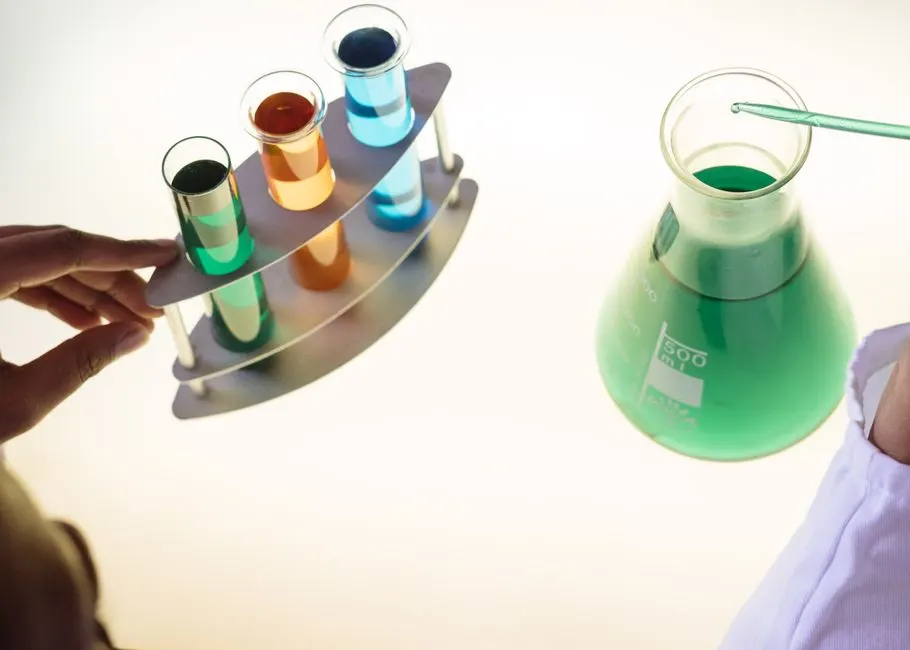
Microalgae need light, carbon dioxide and a handful of dissolved nutrients: nitrogen, phosphorus, potassium, magnesium, iron and traces of other elements. The mixture of these in water is called a culture medium. Laboratories use standard recipes such as BG-11, Bold’s Basal Medium for Chlorella and Zarrouk’s medium for Spirulina, while hobbyists often use a ready-made mix or a complete liquid fertiliser at low strength.
The major nutrients
| Nutrient | Role | Typical source |
|---|---|---|
| Nitrogen | Proteins, chlorophyll | Nitrate (sodium or potassium nitrate), or ammonium in small amounts |
| Phosphorus | Energy transfer, DNA | Phosphate salts |
| Potassium, magnesium, calcium | Enzymes, chlorophyll (Mg), cell function | Mineral salts |
| Iron | Photosynthesis | Chelated iron (with EDTA) |
| Trace elements (Mn, Zn, Cu, Mo, Co) | Enzyme cofactors | Micronutrient solution |
| Carbon | Building block | CO2 from air; bicarbonate for Spirulina |
Standard media
- BG-11 is a general freshwater medium with about 1.5 g/L sodium nitrate, widely used for Chlorella and cyanobacteria.
- Bold’s Basal Medium is a common choice for green algae, including Chlorella.
- Zarrouk’s medium is the classic Spirulina recipe: roughly 16 to 17 g/L sodium bicarbonate, plus about 2.5 g/L sodium nitrate and smaller amounts of phosphate, potassium, sulphate, magnesium, calcium, iron and trace elements. It is strongly alkaline, usually around pH 9 to 10.5.
Each is mixed with clean water and then used as is, or diluted for a starter.
A practical home approach
You do not need to weigh salts to run a hobby culture. Two common options:
- A ready-made algae nutrient mix. Dissolve as directed on the label. This is the easiest route and is what we recommend for beginners.
- A complete liquid plant fertiliser (with nitrogen, phosphorus and trace elements) at a low dose, well below the label rate. It is cheaper but varies by brand, and may contain urea or ammonium that harms some cultures if overdosed.
For Spirulina, bicarbonate is the key extra: add sodium bicarbonate to the water so that it reaches a pH above 9. See Spirulina culture basics.
Water quality
Start with dechlorinated or filtered water. Chlorine and chloramine in tap water harm algae. Hard water is not a problem, and in fact provides some of the minerals. Distilled water needs a full medium, since it has no minerals.
Reading deficiency signs
| Sign | Likely lack |
|---|---|
| Pale or yellow-green culture that is not dense | Nitrogen |
| Slow growth with normal colour | Phosphorus, light or warmth |
| Yellowing of new growth | Iron or trace metals |
| Foam, brown colour and a bad smell | Not a lack, but excess and decay |
More diagnostic help is in how to tell if your algae culture is healthy.
Feeding schedule
For a small jar, add nutrients in small amounts when you start, and top up weekly or when the culture starts to fade. Adding a large dose at once tends to cause a bacterial bloom rather than algal growth. Keep notes in your log so you learn what dose works.
A simple Chlorella medium you can mix
If you prefer to mix your own, Bold’s Basal Medium is a good freshwater choice. The stock solutions are made from common laboratory salts, and a litre of final medium uses 10 mL of each of six macronutrient stocks plus 1 mL of each of four trace solutions. The main ingredients, in grams per litre of final medium, are approximately:
| Ingredient | Role | Approximate amount per litre of medium |
|---|---|---|
| Sodium nitrate | Nitrogen | 0.25 g |
| Dipotassium phosphate | Phosphorus, potassium | 0.075 g |
| Monopotassium phosphate | Phosphorus, buffering | 0.175 g |
| Magnesium sulphate | Magnesium, sulphur | 0.075 g |
| Calcium chloride | Calcium | 0.025 g |
| Sodium chloride | Sodium, osmotic balance | 0.025 g |
| Trace elements (iron, zinc, manganese, copper, molybdenum, boron, cobalt) | Enzymes and pigments | Fractions of a milligram each |
The exact recipe differs between sources, so use a published formulation and a precision balance, or buy a ready-made concentrate. For most hobby use, a pre-made mix is easier and more reliable.
Adjusting for what you see
| Observation | Adjustment |
|---|---|
| Pale culture but dense in the light | Add nitrogen in a small dose; check light distribution |
| Deep green but growth stalls | Check CO2 supply (aeration), temperature and light before adding nutrients |
| Foam and haze after dosing | You gave too much; dilute with fresh water and wait |
| Brown spots on glass | Diatoms; medium may have silicate from tap water; wipe and switch to filtered water |
| White crust at the waterline | Evaporated salts; wipe and top up with water |
Trace metals and chelators
Iron and other metals precipitate in water at neutral and alkaline pH, so media include a chelator, typically EDTA, to keep them available. Without it, algae can show iron deficiency even in a rich medium. Commercial mixes already contain it. If you mix your own, keep iron and phosphate stocks separate and combine them only when diluting, so they do not precipitate in storage.
Nutrients and the animals that eat the culture
What goes into the medium partly ends up in the animals. Cultures grown with enough nitrogen are higher in protein and chlorophyll, which is what live food needs. Starved cultures, under nitrogen stress, store more carbohydrate and lipid and look yellowish. For feeding Daphnia and rotifers, aim for well-fed green cultures. For details, see feeding rotifers with Chlorella and Daphnia and algae.
Common questions
Can I use fish tank water as a medium?
For Chlorella, diluted aquarium water with a little added phosphate can work, but it is variable. A proper medium is more reliable.
Why does the culture stay pale even with nutrients?
Check light and temperature first. Without enough of either, the nutrients are not used.
Can I reuse the medium?
Spirulina medium can be filtered and reused with replenishment. See small habits that make algae culturing greener.
Is household fertiliser safe for algae cultures?
Some are fine at low doses; others contain urea, ammonium or additives that harm cultures or animals. A dedicated algae mix is more predictable.
How long do prepared media keep?
Sterile or clean medium keeps for a few weeks in a sealed container in the fridge. Do not store with algae in it.
Ready to grow your own?
Live starter cultures, grown with care and shipped ready to thrive.
Spirulina PlatensisChlorella VulgarisVisit the shopGet new guides by email, and 10% off
Subscribe for 10% off your first order, plus our latest articles by email. No spam, unsubscribe any time.
Keep reading
Choosing the Right Container for an Algae Culture

Water for Algae Cultures: Tap, Spring or Distilled?

Leave a Reply