
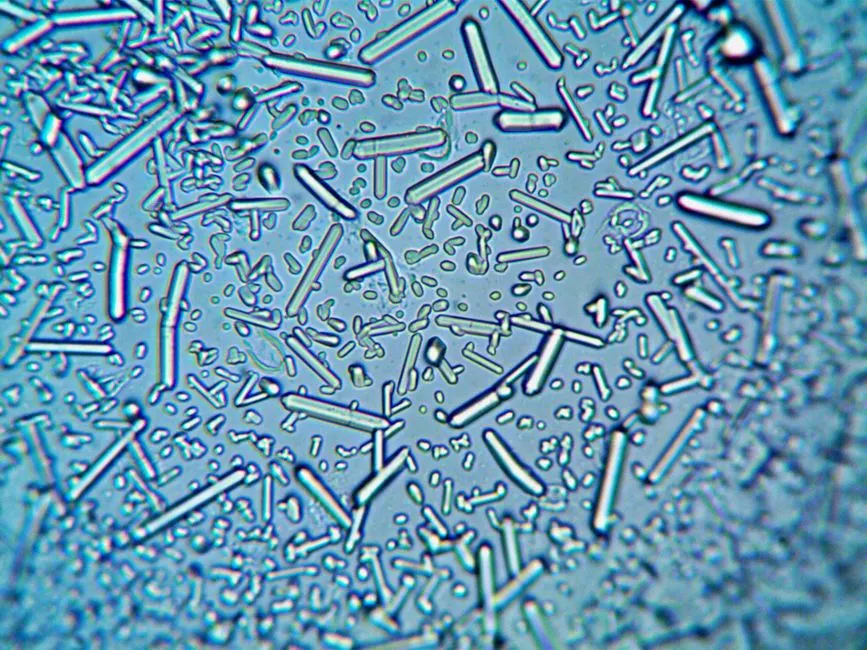
A Spirulina culture needs three things: warmth (30 to 35 °C), bright but not scorching light, and alkaline water around pH 9 to 11 with plenty of bicarbonate. Get those right and it is one of the easier microalgae to keep, because the high pH keeps most competitors out. Get any of them wrong and it simply stops growing.
What you need to start
- A clear container, such as a glass jar or a clean plastic bottle, 1 to 5 litres.
- A starter culture of Spirulina platensis.
- Dechlorinated or filtered water.
- A source of bicarbonate and basic nutrients (see below).
- A light source, such as a bright window or an LED lamp.
- A way to keep it warm: an aquarium heater, a heat mat, or a warm room.
- A loose lid or cloth cover.
Warmth
Spirulina grows fastest at 30 to 35 °C. Below about 20 °C it nearly stops, and above roughly 38 °C the cells are damaged. A small aquarium heater with a thermostat in a water bath around the jar is the most reliable way to hold temperature. More ideas are in temperature control for Chlorella and Spirulina.
Light
Provide bright indirect light for 12 to 16 hours a day. A window that gets several hours of sun works in summer, but in winter a daylight LED lamp, placed 10 to 20 centimetres from the jar, is steadier. Very strong direct sun can bleach a thin culture and overheat a glass jar. If the culture turns pale, shade it a little; if it grows slowly and looks pale because it is thin, give it more light.
Alkaline water and nutrients
Spirulina grows in water that is strongly alkaline, rich in sodium bicarbonate. A classic recipe, Zarrouk’s medium, uses about 16 to 17 grams of sodium bicarbonate per litre plus nitrate, phosphate, potassium, magnesium, iron and trace minerals. Full details are in nutrients and culture media for home microalgae.
For a hobby culture, a pre-mixed Spirulina nutrient mix is easier than weighing salts. Whichever you use, do not add fresh nutrients to a thin, newly started culture all at once; give it a few days to establish.
Mixing
Spirulina filaments settle. Stir the jar once or twice a day, or use an air stone with gentle bubbling. Mixing also brings cells up to the light and helps oxygen escape.
Daily and weekly routine
| When | What |
|---|---|
| Daily | Check colour and smell, stir, check temperature |
| Every few days | Top up evaporated water with dechlorinated water |
| Weekly | Add a small dose of nutrients, check pH, harvest a portion if dense |
| Monthly | Start a fresh jar from part of the culture and keep a reserve |
Signs it is working
The culture darkens from pale green to deep blue-green over a week or two. It smells like fresh water or wet grass. A drop under a microscope shows clean spirals. If something is off, how to tell if your algae culture is healthy helps you diagnose it.
Setting it up, step by step
- Prepare the jar. Wash with hot water and a splash of dilute bleach, rinse thoroughly, and let it dry. A clear 2 litre bottle or a wide glass jar is ideal.
- Fill with water. Use dechlorinated tap water, around 1.5 litres for a 2 litre jar to leave headspace.
- Add medium. Dissolve sodium bicarbonate (about 16 grams per litre) and a Spirulina nutrient mix as directed. The water should end up around pH 9.5 to 10.
- Warm the water. Bring it to 30 °C before adding the starter, using a heater or a warm bath.
- Add the starter. Pour in the culture, ideally about 10 to 20% of the final volume.
- Light and cover. Place under a lamp for 12 to 16 hours a day, with a loose lid.
- Stir. Gently, twice a day, or use an air stone.
Do not worry if the culture looks pale at first. It should deepen over the first week.
Troubleshooting
| Problem | Likely cause | Fix |
|---|---|---|
| No growth after 10 days | Too cold, too dim or too thin a start | Check temperature (30 to 35 °C), add light, use a denser starter |
| Culture turns yellow-green | Too much light for a thin culture, or low nitrogen | Shade it; add a small dose of nitrate |
| Culture clumps and settles | No mixing or low pH | Stir more; check that pH is above 9 |
| Brown film on the glass | Diatoms or bacteria | Wipe the glass; ensure medium is alkaline |
| Strong sour smell | Bacterial bloom, often after a heat spike | Restart from the reserve |
How much you can expect
A 2 litre jar at 30 °C under a good lamp can reach a deep blue-green in two to three weeks. As a rough guide, a dense hobby culture holds the equivalent of 0.3 to 0.6 grams of dry biomass per litre. Harvesting a few hundred millilitres every few days is realistic, and the numbers improve with warmer, brighter conditions. Do not expect a food supply from a jar; it is a feed and educational culture. If it is a feed culture you want, harvesting Spirulina shows how to use it.
Common beginner mistakes
- Skipping the bicarbonate. Without it, the pH stays too low and Spirulina struggles.
- Putting the jar in a cold room and expecting it to grow.
- Adding all nutrients at once to a thin starter.
- Using strongly chlorinated tap water without treating it.
- Never keeping a reserve; see how to split and scale up.
Common questions
Can I grow Spirulina at room temperature?
It survives at 20 to 25 °C but grows slowly. For useful growth, keep it warmer.
Do I need an air pump?
Not strictly. Daily stirring works for small jars, but gentle aeration speeds growth.
How do I use the culture once it is dense?
Harvest by pouring through a fine cloth, then use or feed it. See how to harvest algae.
Can I use sea salt instead of bicarbonate?
No. Spirulina needs bicarbonate and carbonate for carbon and alkalinity, not just salt.
How long does a jar last?
With regular harvesting and topping up, indefinitely. Replace the medium completely every couple of months.
Ready to grow your own?
Live starter cultures, grown with care and shipped ready to thrive.
Spirulina PlatensisChlorella VulgarisVisit the shopGet new guides by email, and 10% off
Subscribe for 10% off your first order, plus our latest articles by email. No spam, unsubscribe any time.
Keep reading
Choosing the Right Container for an Algae Culture
Water for Algae Cultures: Tap, Spring or Distilled?

Leave a Reply