
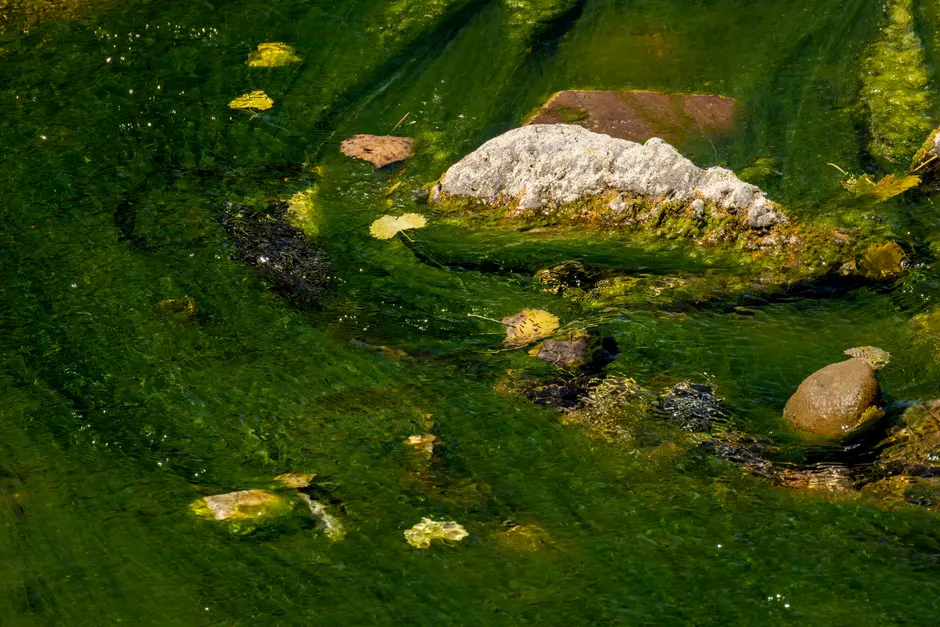
Spirulina and Chlorella are two of the most widely grown microscopic organisms in the world. Spirulina is a blue-green, spiral-shaped cyanobacterium that grows in warm, alkaline water. Chlorella is a round, green single-celled alga that grows in fresh water. Both are produced commercially for feed, research and food ingredients, and both are easy to keep at home in small amounts.
What they are
Spirulina (the species grown is usually Arthrospira platensis) is a cyanobacterium, an ancient group of bacteria that can photosynthesise. It forms coiled filaments, called trichomes, that you can see as tiny green-blue threads under a microscope. In nature, it lives in warm, alkaline lakes in tropical and subtropical regions.
Chlorella (Chlorella vulgaris is the common species) is a true alga. It is a tiny sphere, 2 to 10 micrometres across, and it is found in ponds, lakes and soil around the world.
How they differ at a glance
| Spirulina | Chlorella | |
|---|---|---|
| Type | Cyanobacterium | Green alga |
| Shape | Spiral filaments | Round single cells |
| Colour | Blue-green | Bright green |
| Preferred water | Alkaline, pH 9 to 11 | Neutral, pH 6.5 to 7.5 |
| Preferred temperature | 30 to 35 °C | 25 to 30 °C |
| Cell wall | Soft, easily digested | Rigid, hard to break |
| Harvesting | Easy with a fine cloth | Needs settling or a centrifuge |
For a longer comparison with practical consequences, see Spirulina vs Chlorella.
What are they used for?
- Aquaculture and aquarium feed. Chlorella feeds rotifers and Daphnia, which in turn feed fish larvae. Spirulina is a protein-rich feed for shrimp and larger animals.
- Research and teaching. Both are used in schools and laboratories to study growth, photosynthesis and nutrient use.
- Food and nutrition ingredients. Both are sold dried as ingredients. Food use is regulated, so it needs products labelled for the purpose.
- Hobby growing. Many people keep a jar simply because it is interesting and low-effort.
Why people grow their own
A live starter culture multiplies, so a small bottle can supply months of feed. It also shows you how living systems behave, with growth, crashes and recovery visible in a jar over days. If you are curious how much work that is, Spirulina culture basics and nutrients and culture media show what is involved.
Where to start
Begin with one species. Chlorella is the easier choice at room temperature, while Spirulina rewards you if you can keep it warm. Our Chlorella vulgaris and Spirulina platensis starter cultures come in several volumes with instructions.
A short history
People have used both organisms for centuries without knowing what they were. Spirulina was harvested from Lake Texcoco in Mexico by the Aztecs, who dried it into cakes, and from Lake Chad in Africa, where the Kanembu people still dry it into a food called dihe. Chlorella was first described by the Dutch microbiologist Martinus Beijerinck in 1890 and became one of the most studied organisms in plant physiology; it was a key subject in the experiments that worked out how photosynthesis fixes carbon.
Large-scale culture began in the mid-20th century. Chlorella was grown in Japan and Taiwan from the 1950s and 1960s, and Spirulina farms were set up in Mexico, the United States and later across Asia. Today, both are produced in ponds, tubes and tanks worldwide.
What is in them
Both are rich in protein, chlorophyll and carotenoids. Typical dry-weight composition ranges are:
| Spirulina | Chlorella | |
|---|---|---|
| Protein | 55 to 70% | 45 to 60% |
| Carbohydrate | 15 to 25% | 10 to 25% |
| Fat | 5 to 8% | 5 to 20% |
| Main pigments | Chlorophyll a, phycocyanin, carotenoids | Chlorophyll a and b, carotenoids |
Values vary with strain, growth conditions and processing. These are ranges drawn from the typical literature, not guarantees for any product.
What a hobby culture looks like in practice
A 1 litre jar of Chlorella sits on a shelf under a lamp. A week after starting, it is a bright, even green and smells fresh. You pour off 200 mL a few times a week to feed Daphnia or to dose a tank, replace it with fresh medium, and the jar returns to full density in a few days. A jar of Spirulina does the same at a warmer temperature and a slower pace, and can be strained for a paste. That is the whole practice; it is closer to keeping a sourdough starter than to keeping a fish.
Common misconceptions
- “They are plants.” Chlorella is a protist-like alga; Spirulina is a bacterium. Neither is a plant in the botanical sense.
- “They are the same thing.” They have different cells, walls, media and uses, as shown in Spirulina vs Chlorella.
- “A jar of green water is always useful.” Only a clean, healthy culture is. A smelly or brown jar is a hazard, not a resource.
- “You need a laboratory.” A jar, a lamp and a routine are enough.
Where to go next
Once you understand the basics, pick a direction. For aquarium and feed use, read culturing live food. For the biology, read how Chlorella reproduces and how Spirulina grows. For the growing itself, start with nutrients and culture media.
Common questions
Is Spirulina an alga?
In everyday language yes, but scientifically it is a cyanobacterium. See why Spirulina isn’t an alga.
Can I grow them in the same jar?
No, because they prefer different pH and temperature.
Are they difficult to keep?
Not very. Light, warmth, a covered container and a little regular feeding are enough for a healthy culture.
Are they safe to keep at home?
Cultured strains grown clean are safe to keep. Do not drink the culture, and wash your hands after handling.
Which is older?
Cyanobacteria like Spirulina are far older, dating back over two billion years. Green algae such as Chlorella arose later.
Ready to grow your own?
Live starter cultures, grown with care and shipped ready to thrive.
Spirulina PlatensisChlorella VulgarisVisit the shopGet new guides by email, and 10% off
Subscribe for 10% off your first order, plus our latest articles by email. No spam, unsubscribe any time.
Keep reading
Live Algae Cultures vs Dried Algae Products
What Is Phycocyanin? The Blue Pigment in Spirulina
Leave a Reply